
Sulfuric Acid Tanks
Design, create, and deliver sulfuric acid tank solutions with the Midwest Tank team.
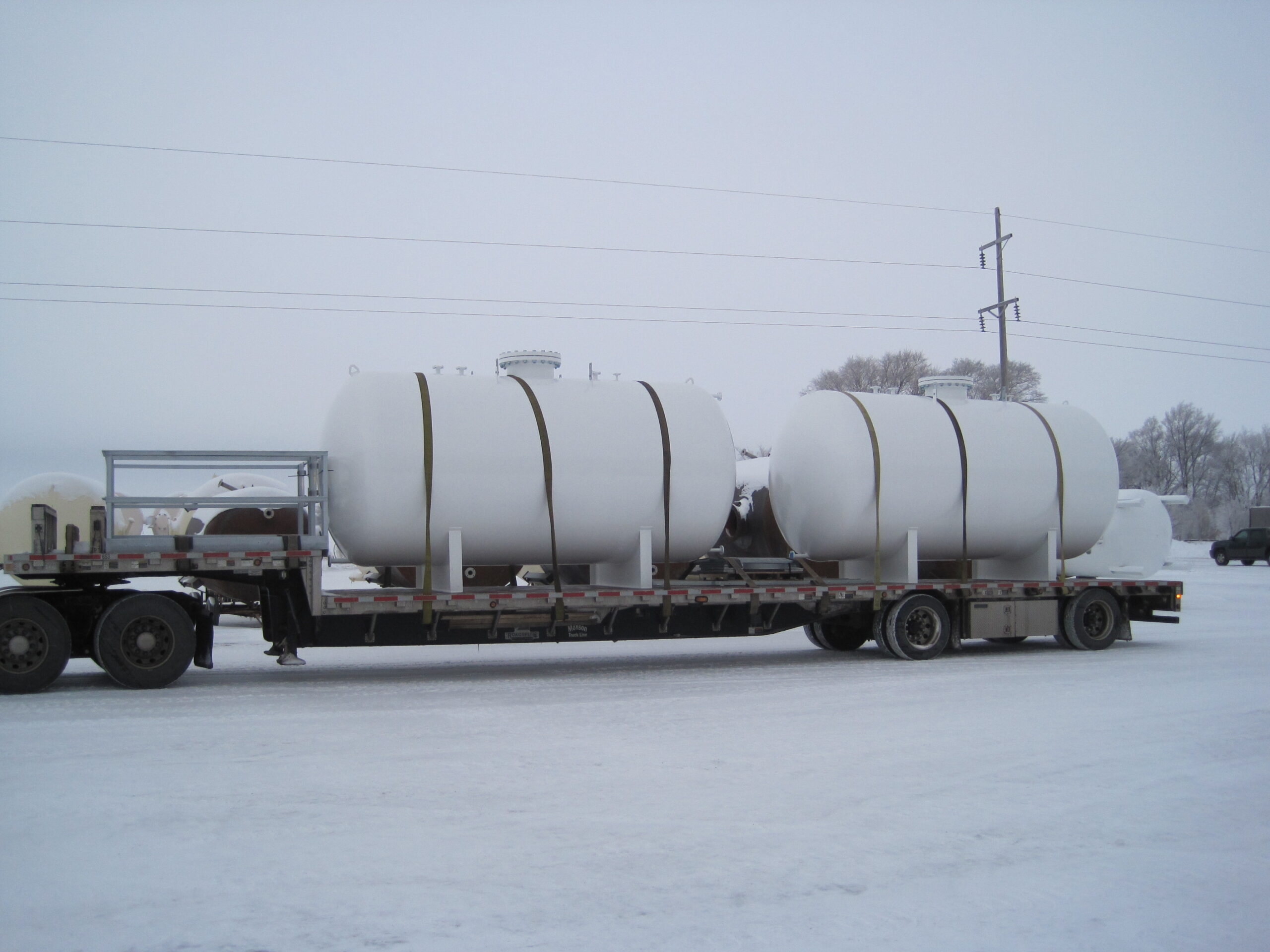
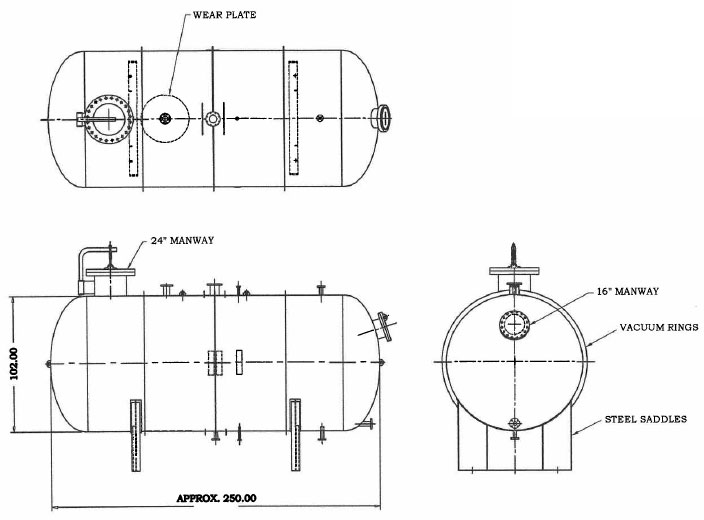
Most process plants, power plants and water treatment plants have one or more sulfuric acid storage tanks. Concentrated sulfuric acid can be stored in carbon steel tanks at ambient temperatures without a lining. Sulfuric Acid becomes more corrosive as it is diluted by water. Some concentrated sulfuric acid tank options are lined with a baked phenolic coating to maintain acid purity. It is recommended that some corrosion allowance be designed with each vessel.
| Specifications | |
|---|---|
| Capacity | Call To Find Out If Midwest Tank Can Build It. gal |
Industries That Rely on Sulfuric Acid Tanks
Sulfuric acid tanks are essential for safely storing and handling one of the most widely used industrial chemicals: sulfuric acid. At Midwest Tank Company, we specialize in designing custom sulfuric acid storage tanks to meet the needs of various industries, ensuring safety, and durability. Here’s a look at the key industries that depend on these specialized tanks.
The chemical manufacturing industry is a primary user of sulfuric acid tanks. Sulfuric acid is a critical component in producing fertilizers, detergents, and dyes. Manufacturers require robust tanks to store large volumes of this corrosive substance, ensuring safe handling during production processes.
The mining industry also heavily relies on sulfuric acid tanks for leaching processes. Sulfuric acid is used to extract metals like copper, uranium, and gold from ores. Midwest Tank Company’s tanks are built to withstand harsh conditions, providing reliable storage for mining operations.
In the petroleum refining sector, sulfuric acid plays a role in alkylation processes to produce high-octane gasoline.
The water treatment industry uses sulfuric acid to adjust pH levels and treat wastewater. Our tanks help water treatment facilities store sulfuric acid securely, supporting environmental compliance.
Finally, the pulp and paper industry utilizes sulfuric acid in bleaching processes. Durable tanks are vital for maintaining production quality and safety.
Material Compatibility
Sulfuric acid tanks are constructed to support the storage of concentrated sulfuric acid at ambient temperatures. Carbon steel is commonly used for these applications because concentrated sulfuric acid forms a protective layer that limits corrosion under stable conditions. As sulfuric acid becomes diluted, its corrosive behavior increases, and material selection becomes more important for long term performance. Some tanks incorporate interior linings to support acid purity or meet specific process requirements.
Storage Characteristics
Sulfuric acid storage requires predictable containment performance across a range of industrial environments. Concentrated sulfuric acid can be stored in unlined carbon steel tanks, while certain applications use baked phenolic linings to maintain product quality. Corrosion allowance is typically included in the vessel design to support long term service life. Storage conditions such as temperature stability, exposure to moisture, and handling practices influence the selection of tank configuration and material thickness.
Key Considerations for Sulfuric Acid Storage
- Concentration level and its impact on corrosivity
- Temperature stability during storage
- Need for interior linings to maintain product purity
- Corrosion allowance requirements for long-term service
- Material thickness based on operating environment
- Compatibility with facility handling and transfer practices
Common Use Cases
Sulfuric acid tanks support operations where controlled storage of corrosive media is required. They are used to maintain supply for continuous processes, support batch operations, and provide buffer capacity for facilities that depend on sulfuric acid as a feedstock or treatment chemical. Tanks are selected based on concentration levels, purity requirements, and the operational environment of the facility.
Sulfuric Acid Tank FAQs
Can Concentrated Sulfuric Acid Be Stored in Carbon Steel Tanks?
Yes. Concentrated sulfuric acid can be stored in carbon steel tanks at ambient temperatures because the acid forms a protective layer that limits corrosion under stable conditions.
When Is a Lined Sulfuric Acid Tank Recommended?
Lined tanks are used when maintaining acid purity is important or when storage conditions require additional protection. Baked phenolic linings are commonly used for these applications.
Does Sulfuric Acid Become More Corrosive When Diluted?
Yes. Sulfuric acid becomes more corrosive as water content increases, which influences acid tank material selection and corrosion allowance requirements.
Midwest Tank Co. offers customized sulfuric acid tanks for these industries, ensuring safe storage and long-term reliability. to learn more about our solutions!