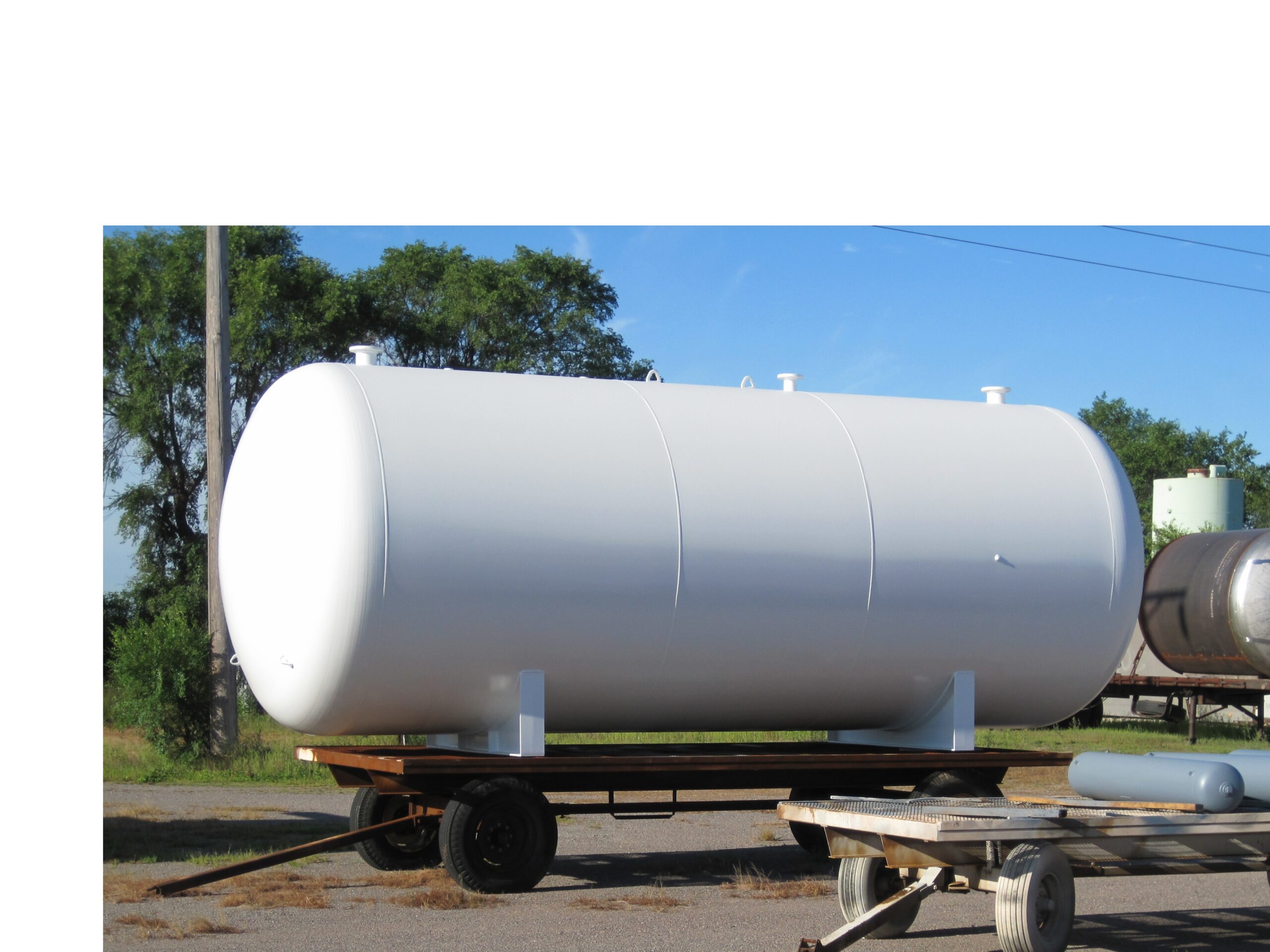
Your Guide For Sprinkler Tank Selection
Whether it is a gravity tank, suction tank, or pressure vessel, Midwest Tank can build a sprinkler tank to meet your job specification. All tanks are built to meet the current edition of ANSI/NFPA 22 specification “Water Tanks for Private Fire Protection.” The interior metal preparation will be an SSPC-SP 10 near-white blast. The exterior metal preparation will be an SSPC-SP 6 commercial blast. These tanks are required to be coated inside and out per specification AWWA D102, “Inside Paint System #1.”
A pressure tank shall be kept two-thirds full of water, with a maintained air pressure of at least 75 PSI by the gauge. The pressure tanks are ASME labeled and hydrostatically tested at 150 PSI.
Buried pressure tanks shall be protected against freezing with installation below the frost line. The end of the tank and at least 18 inches of its shell shall project into the building basement or a pit in the ground, with protection against freezing. The manhole should be accessible and space allowed for inspection and maintenance. Anodes are supplied by Midwest Tank for cathodic protection. Installation of buried tanks should comply with your local Fire Marshall and ANSI/NFPA 22.
Applications
Sprinkler tanks support facilities that require stored water for fire-suppression systems. They are used in manufacturing plants, distribution centers, commercial buildings, and institutional properties where consistent water availability is part of the site’s fire-protection infrastructure. These tanks are selected for projects where long term reliability, compliance with recognized standards, and dependable performance are priorities.
Advantages
Sprinkler tanks offer dependable service in a wide range of installation environments. Their construction supports long term durability, and their surface preparation and coating systems align with recognized industry specifications. Above-ground and buried configurations allow flexibility based on project requirements and site conditions. Pressure-rated vessels provide an option for installations that require stored water to be maintained at a defined pressure level.
Key Features
- Manufactured to align with ANSI/NFPA 22
- Interior SSPC-SP 10 near-white blast preparation
- Exterior SSPC-SP 6 commercial blast preparation
- Coating systems following AWWA D102 Inside Paint System #1
- ASME-labeled pressure vessels hydrostatically tested at 150 PSI
- Buried tank options with cathodic protection anodes
Sprinkler Tank FAQs
What Standards Do Sprinkler Tanks Follow?
Sprinkler tanks are manufactured to align with the current edition of ANSI/NFPA 22, which governs water tanks used for private fire-protection systems. Additional preparation and coating requirements follow SSPC and AWWA specifications.
What Types of Sprinkler Tanks Are Available?
Common sprinkler tank configurations include gravity tanks, suction tanks, and pressure-rated vessels. Each type supports different storage and installation requirements.
How Are Pressure-Rated Tanks Verified?
Pressure-rated tanks are ASME labeled and undergo hydrostatic testing to confirm that the vessel can maintain the required pressure rating during operation.
Can a Sprinkler Tank Be Installed Underground?
Yes. Buried tanks are installed below the frost line and include protective measures such as cathodic protection anodes. Installation must follow local Fire Marshal requirements and ANSI/NFPA 22 guidelines.