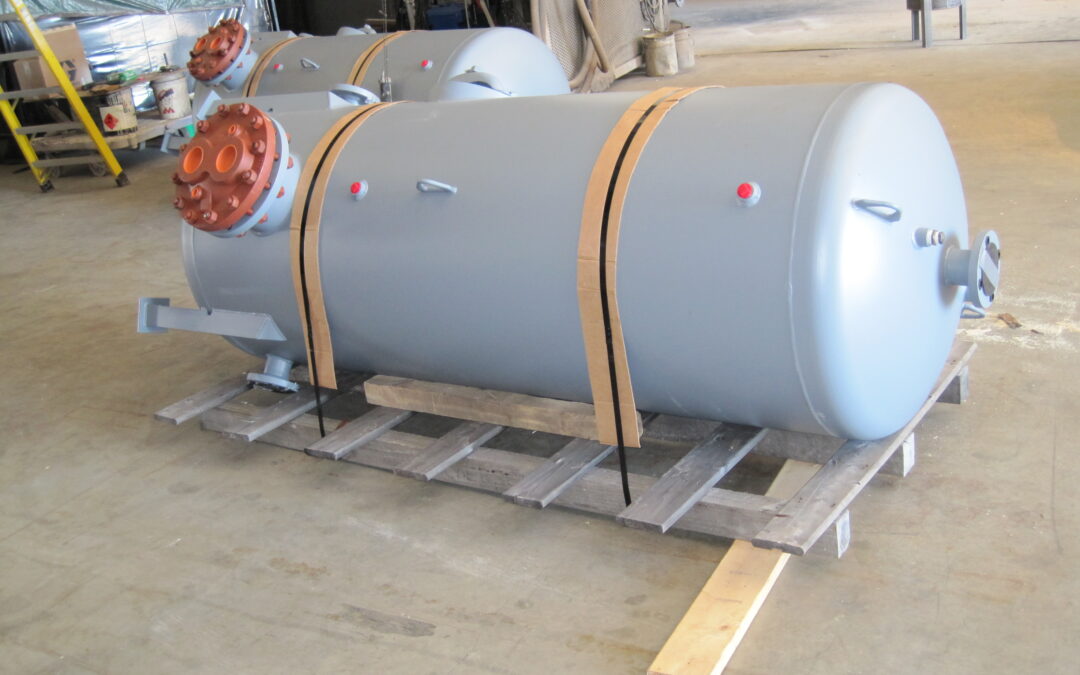
Pressure vessels play a central role in industrial and manufacturing environments where gases, liquids, and chemical mixtures must be stored or processed under controlled pressure. Their design requires careful attention to material behavior, structural integrity, safety standards, and long-term performance. Engineers rely on pressure vessels for applications ranging from chemical processing and energy production to food manufacturing and pharmaceutical operations. Because these vessels operate under internal pressure, pressure vessel design must account for strength, stability, and predictable performance across a wide range of operating conditions.
Key Takeaways: Pressure Vessel Design for Industrial and Manufacturing Applications
- Pressure vessel design requires careful evaluation of material behavior, structural integrity, and operating conditions to ensure safe and reliable performance.
- Material selection influences strength, corrosion resistance, and long-term durability, making it a central part of the design process.
- Pressure vessels support a wide range of industrial and manufacturing applications where controlled pressure environments are needed.
Pressure Vessel Function
A pressure vessel is a sealed container engineered to hold fluids at pressures that differ from the surrounding environment. This pressure differential creates stress on the vessel walls, which means the design must ensure that the vessel can withstand both normal operating conditions and unexpected fluctuations. The vessel’s geometry, material selection, and fabrication method all influence how it performs under load.
Cylindrical and spherical shapes are commonly used because they distribute stress evenly. Flat surfaces, by comparison, require reinforcement to maintain stability. Engineers evaluate the vessel’s intended pressure range, temperature exposure, and fluid characteristics before selecting the correct configuration.
Material Selection and Structural Behavior
Material choice is one of the most important aspects of pressure vessel design. The selected material must support the required pressure while resisting corrosion, fatigue, and temperature-related changes. Carbon steel, stainless steel, and specialized alloys are frequently used because they provide predictable strength and durability.
Several factors influence material selection:
- Required pressure rating
- Operating temperature
- Corrosive or reactive fluid characteristics
- Fabrication method
- Long-term maintenance expectations
The material must also support reliable welds and joints, since these areas experience concentrated stress. Engineers evaluate how the material behaves under cyclic loading, thermal expansion, and environmental exposure to ensure long-term reliability.
Design Considerations for Industrial Use
Pressure vessel design involves more than selecting a material and shape. Engineers must consider how the vessel will be used, how it will be maintained, and how it will interact with surrounding equipment. Internal pressure, external loads, and temperature changes all influence the vessel’s structural behavior.
Key design considerations include:
- Wall thickness required to support internal pressure
- Reinforcement for openings, nozzles, and access points
- Support structures that maintain stability during operation
- Insulation or thermal protection for temperature-sensitive processes
- Integration with piping, valves, and monitoring equipment
These factors ensure that the vessel performs consistently and safely throughout its service life.
Fabrication and Quality Control
Fabrication quality directly affects vessel performance. Welding, forming, and machining must be completed with precision to maintain structural integrity. Engineers rely on standardized fabrication practices that ensure consistent results across all vessel components.
Quality control measures often include:
- Dimensional verification
- Weld inspection
- Pressure testing
- Surface evaluation
- Material certification
These steps confirm that the vessel meets design specifications and can withstand the pressures it will encounter during operation.
Inspection and Maintenance Requirements
Pressure vessels require ongoing inspection to ensure continued safety and performance. Over time, vessels may experience wear, corrosion, or fatigue. Regular inspection helps identify early signs of deterioration so that corrective action can be taken before performance is affected.
Inspection programs typically evaluate:
- Wall thickness changes
- Weld condition
- Surface corrosion
- Pressure relief device performance
- Structural stability
Consistent maintenance supports long-term reliability and reduces the risk of unexpected downtime.
Applications Across Industrial and Manufacturing Sectors
Pressure vessels are used in a wide range of industries. Chemical processing facilities rely on them for reaction control. Food manufacturers use them for mixing, heating, and storage. Energy producers depend on them for steam generation and fuel handling. Pharmaceutical operations use pressure vessels for controlled processing environments.
Find Your Pressure Vessel
Pressure vessels are foundational components in industrial and manufacturing operations. Their design influences safety, efficiency, and long-term reliability. By understanding how materials, geometry, fabrication, and inspection all work together, engineers can select and design vessels that support consistent performance. Contact Midwest Tank Company today to get started on your project!
Recent Comments